Feeding your family on a budget of $100 a month sounds impossible, but with the right system, it absolutely works. When adjusted for today’s prices, that’s roughly $300 to $400 a month by cooking from scratch, buying in season, and preserving food your family actually eats. This isn’t about couponing or deprivation, it’s about using a simple, proven system that stretches every dollar.
Quick Look at This Recipe
- ⌚ Time: Ongoing system with 1–2 hours weekly planning
- 💰 Budget: ~$300-$400/month ($100/month 1980s equivalent)
- 🛒 Strategy: Lower grocery bills and a stocked pantry with a sales-based shopping + meal planning approach
- 🍲 Meals: Simple, from-scratch, seasonal
- 🥕 Focus: Real food, minimal waste, maximum use. Preserved foods last 6–12 months depending on method
- 👉 Takeaway: It’s not about deprivation—it’s about intention
✅ Summarize this recipe, or ask for recipe substitutions and dietary information with AI.
But here’s the truth: it is possible to feed your family on a tight budget without sacrificing quality or nutrition.
I know this because I lived it.
Growing up, my mom fed our family on about $20 a week (right around $100 a month). And while times have changed, the principles she used in the kitchen are just as effective today as they were back then.
In fact, these are the very habits that shaped how I cook, shop, and run my kitchen today.
Watch the updated podcast episode (#507) where I expound on my mom's method, then be sure to catch the original podcast episode (#504) with my mom below:
Why This Still Works Today

We may not be living on $100 a month anymore, but the systems behind that kind of budgeting haven’t changed.
My mom didn’t rely on extreme couponing, complicated systems, or trendy budgeting methods.
She relied on:
- Cooking from scratch
- Buying ingredients instead of convenience foods
- Planning ahead
- Using what she had
And most importantly… she didn’t waste food.
1. Build Your Kitchen Around Staple Ingredients
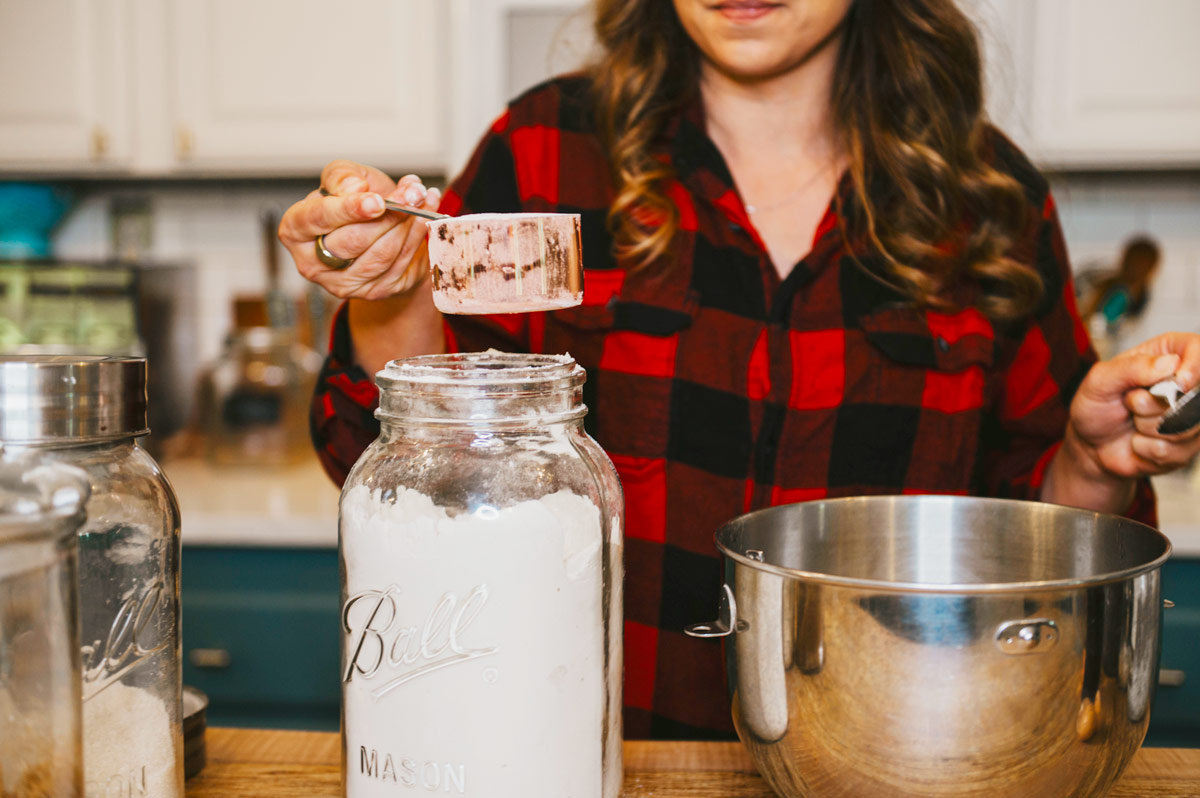
One of the biggest differences between how we ate growing up and how many people eat today is this: We didn’t build meals from packaged foods. We built them from ingredients.
My mom always kept a simple foundation in the pantry:
- Flour
- Sugar
- Oats
- Butter
- Milk
- Eggs
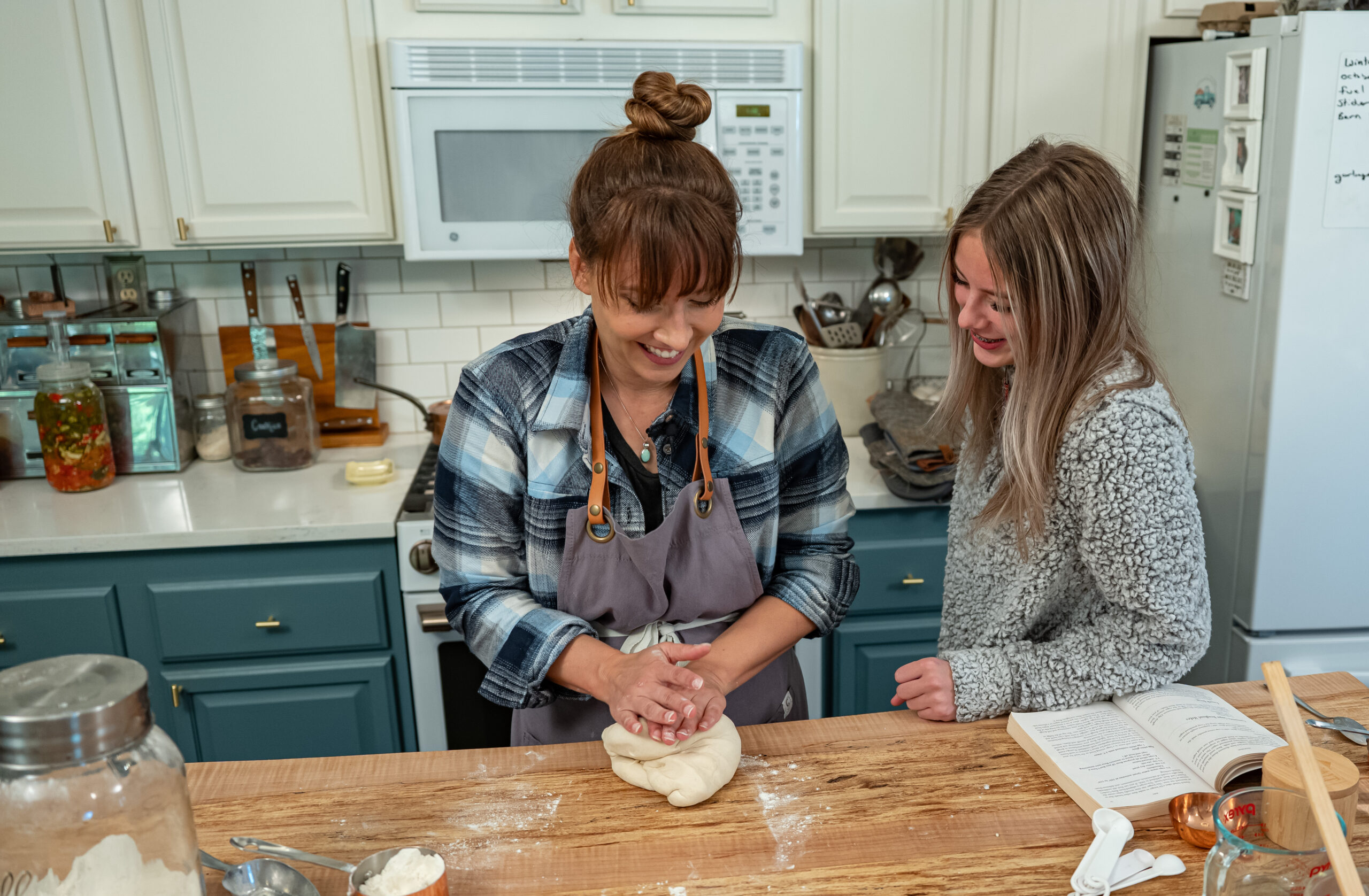
From those basics, she could make everything from bread to cookies to full meals.
And here’s the key… Staples stretch further than convenience foods, every single time.
Instead of buying boxed mixes, frozen meals or pre-made snacks, she made things from scratch. Not because it was trendy, but because it was what the budget required.
2. Shop the Sales (But Do It Strategically)
This wasn’t about clipping coupons for a few cents off. It was about recognizing a true deal and buying ahead.
When something was deeply discounted (like oatmeal, flour, or canned goods), she would:
- Check the expiration date
- Estimate how much we’d use before the product would expire
- Buy in bulk within the budget to stock up as much as she could with the sale price
That’s how the pantry was built. She would never just buy one item if it was a really good sale. She'd buy what she knew we could use.
This is one of the biggest mindset shifts you can make. Don’t just shop for this week. Shop for the future when prices are low.
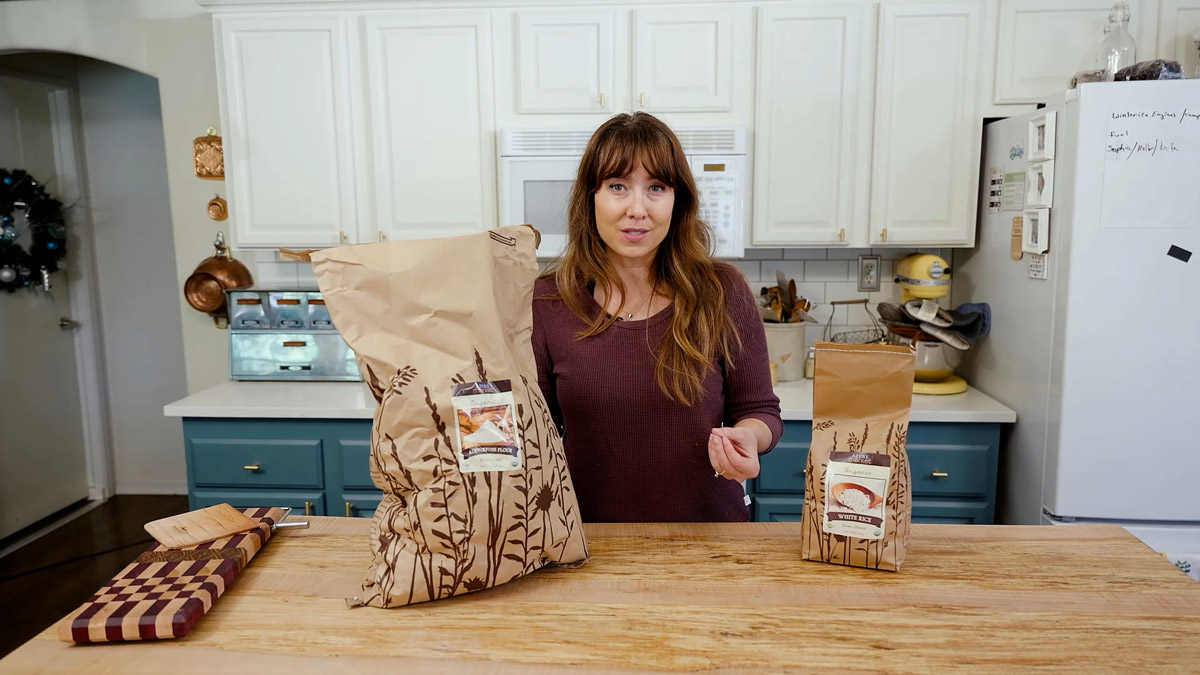
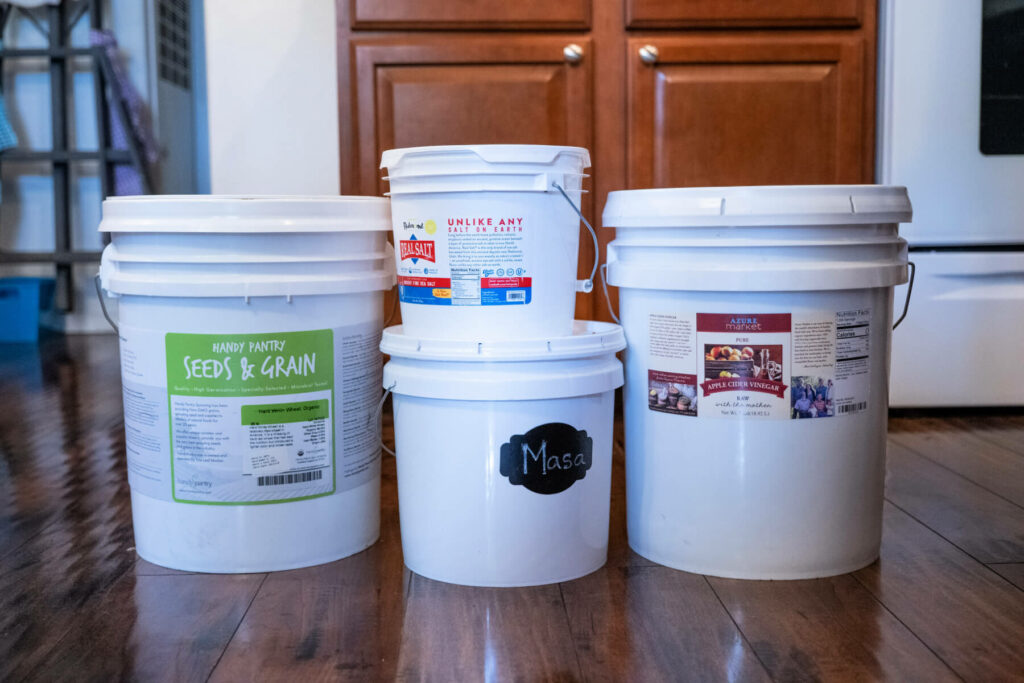
This is a strategy I mimic by shopping in bulk from Azure Standard. When compared to smaller bags of flour, oats, and sugar, the bulk bags from Azure are much more affordable. (Save even more at Azure with coupon code "MELISSA15" for 15% off your first order of $100 or more - new customers only!)
Sure, you have to spend the money up front when buying in bulk, but when this becomes a regular practice, the budget works itself out in the long run.
3. Cook From What You Have (Not What You Feel Like)
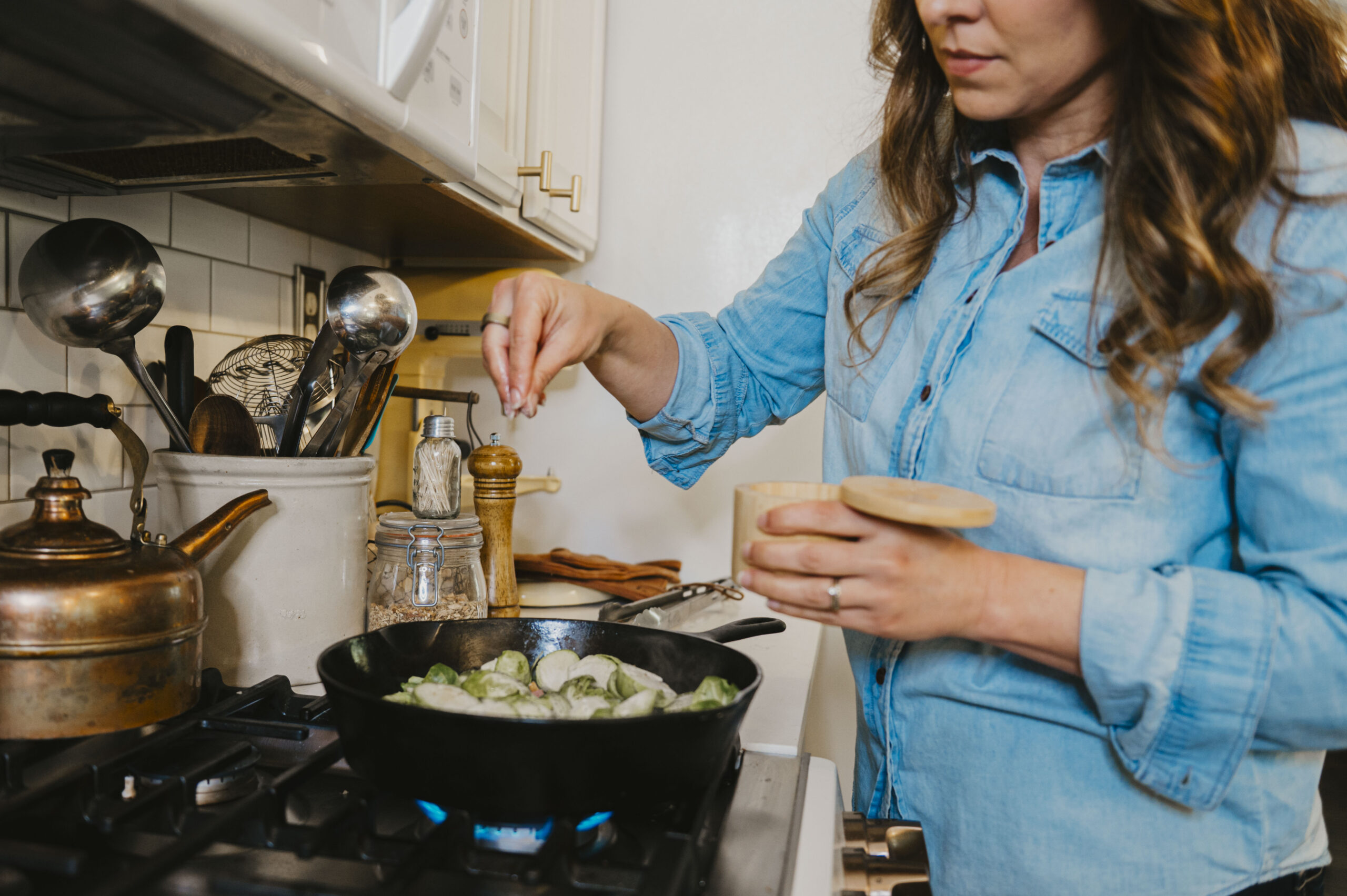
This is where most grocery budgets fall apart today. We’re used to deciding what we want to eat… then going to the store to buy it.
My mom did the opposite. She looked at what was already in the pantry and asked: “What can I make from this?”
And that’s what we ate.
This is also where creativity in the kitchen really shines:
- Hamburger became “sausage” pizza with added spices
- Applesauce became a topping for biscuits
- Leftovers were turned into entirely new meals
It wasn’t about limitation. It was about resourcefulness.
4. Waste Nothing (This Is Where the Real Savings Are)
If there’s one habit that made the biggest difference, it was that nothing went to waste.
Leftovers weren’t optional. They were expected.
Extra food became the next day’s meal, whether that was in the same form as the day before or turned into something new. Staying on budget sometimes requires creativity!
Beyond meals…
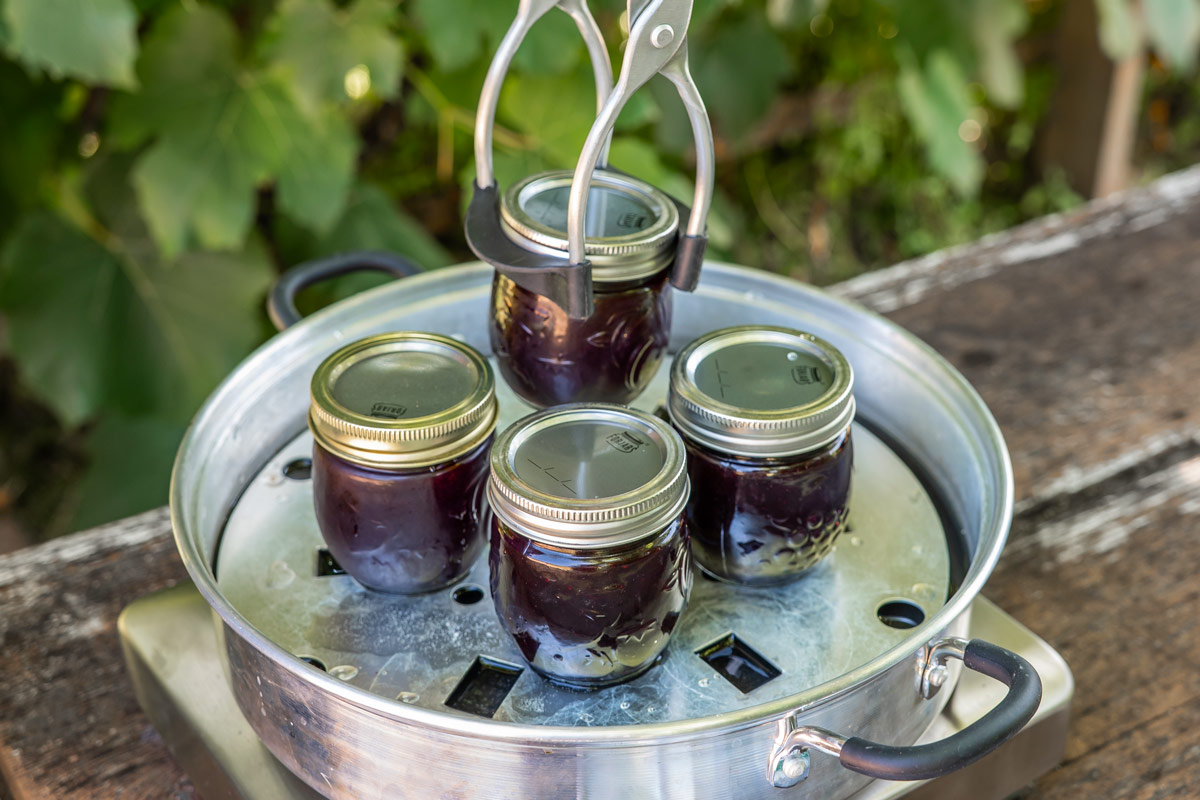
- Blackberries were turned into syrup or homemade blackberry jam
- Apples became homemade canned applesauce, apple butter, and canned apple pie filling
- Even pantry items were rotated and used before expiring
My mom would regularly go through the pantry, pull items nearing expiration, and build meals around them.
That’s how you truly stretch a dollar.
5. Eat Seasonally (Even If You Don’t Garden)
We didn’t eat strawberries in winter or buy out-of-season produce (unless it was preserved and put up from our summer garden). We ate what was available.
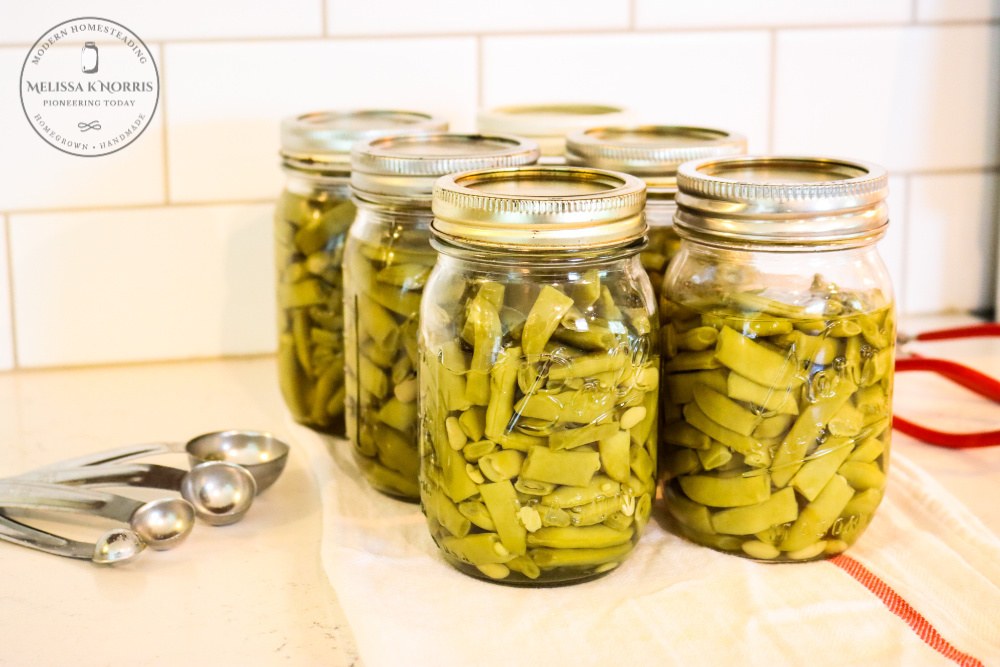
- Canned green beans from the garden
- Apples from local trees
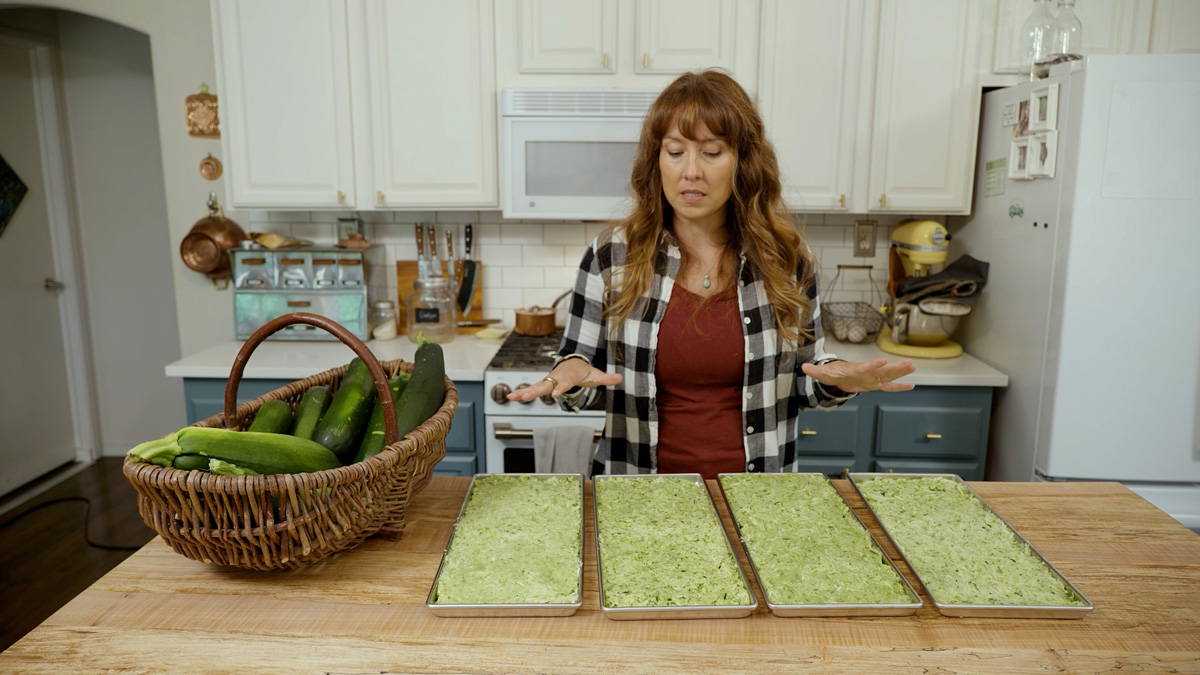
- Zucchini in summer (then turned into freeze-dried zucchini or these other ways to preserve zucchini)
- Pumpkin in the fall, then turned into pumpkin puree for grandma's famous pumpkin roll, no-bake pumpkin cream pie, these old-fashioned pumpkin sugar cookies, or these pumpkin applesauce muffins (or my mom's pumpkin pie, which will be featured in the fall edition of Plated by Season).
And when something wasn’t in season? We didn’t buy it. This alone saves a significant amount of money, even today.
6. Treat “Extras” Like Extras
This is something that’s almost completely flipped in modern culture.
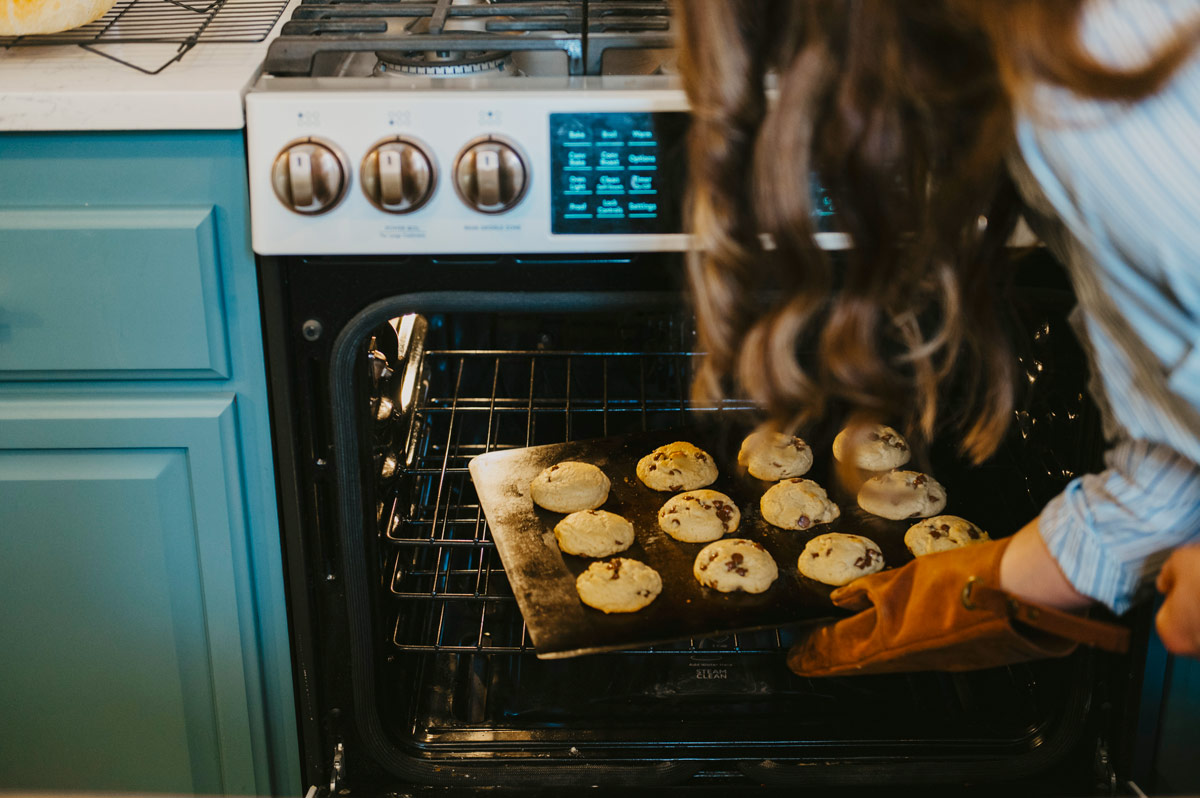
Growing up, things like soda, cold cereal, chocolate chips and even chicken were considered treats, not staples.
We didn’t have them all the time. We had them occasionally. And because of that, they felt special.
That one shift can completely transform your grocery budget.
7. Make It Fun (Even When You’re Saving Money)
One of my favorite memories? We couldn’t afford fast food, so my mom made it at home.
She’d cook hamburgers and fries, and my friends and I would sit in the car pretending we went through a drive-thru. Then my mom would deliver it to us in paper bags!
And honestly? I didn’t feel like we were missing out. That’s the heart of this whole approach.
👉 Frugality doesn’t have to feel like deprivation.
It can feel intentional, creative, and even fun.
The System Behind Feeding a Family on $100 a Month
What made this work wasn’t just frugality, it was a system.
My mom wasn’t couponing or chasing random sales. She matched what she preserved to what we actually ate. Every single item that came into the house had a purpose and a meal attached to it.
Here’s what that system looked like:
1. Buy and Preserve Food by Season
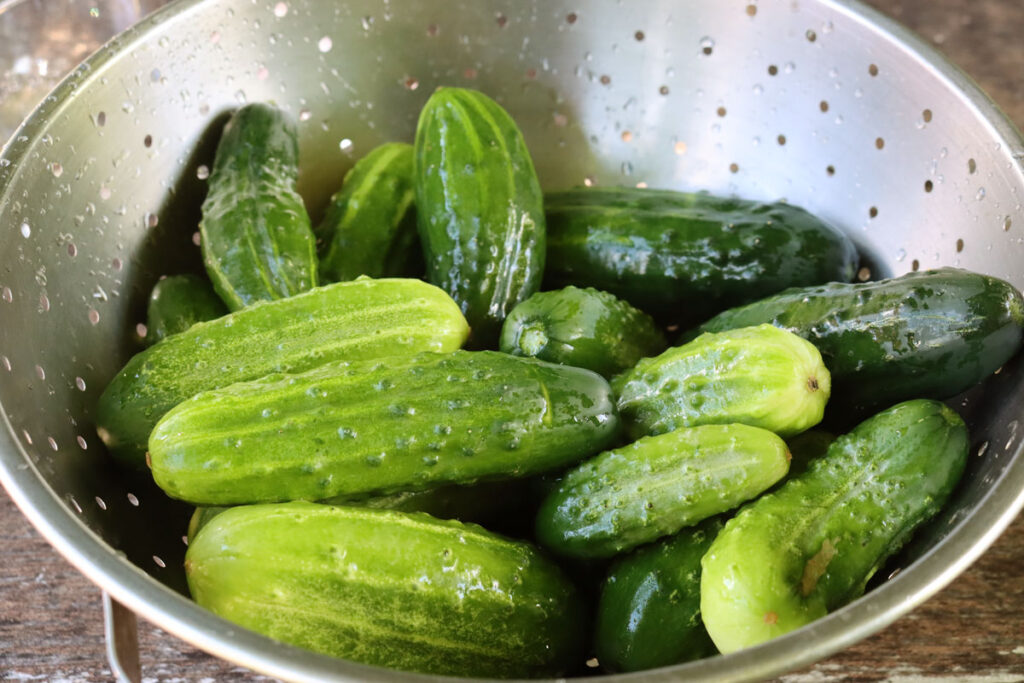
Food is always cheapest when it’s in season. That’s when you buy it, preserve it, and store it.
As I mentioned before, we didn’t eat strawberries in winter or asparagus in the fall (unless they were preserved in season).
This alone keeps grocery costs dramatically lower.
2. Preserve What Your Family Actually Eats
This is where most people miss it.
You need to know:
- What meals you cook every week
- What your family enjoys
- What actually gets eaten
My mom didn’t preserve food just because it was available. She preserved what she knew would be used. It saves you no money to preserve a year's worth of green beans if no one in your family actually eats or enjoys them.
Preserve the food your family will look forward to!
3. Source Food Intentionally
Instead of shopping randomly, mom always had a plan.
She:
- Bought staples in bulk when prices were lowest
- Paid attention to seasonal sales
- Built relationships with local sources
Over time, this becomes second nature.
4. Eliminate Food Waste
Because everything had a purpose, very little went to waste. This is one of the biggest hidden ways this system saves money.
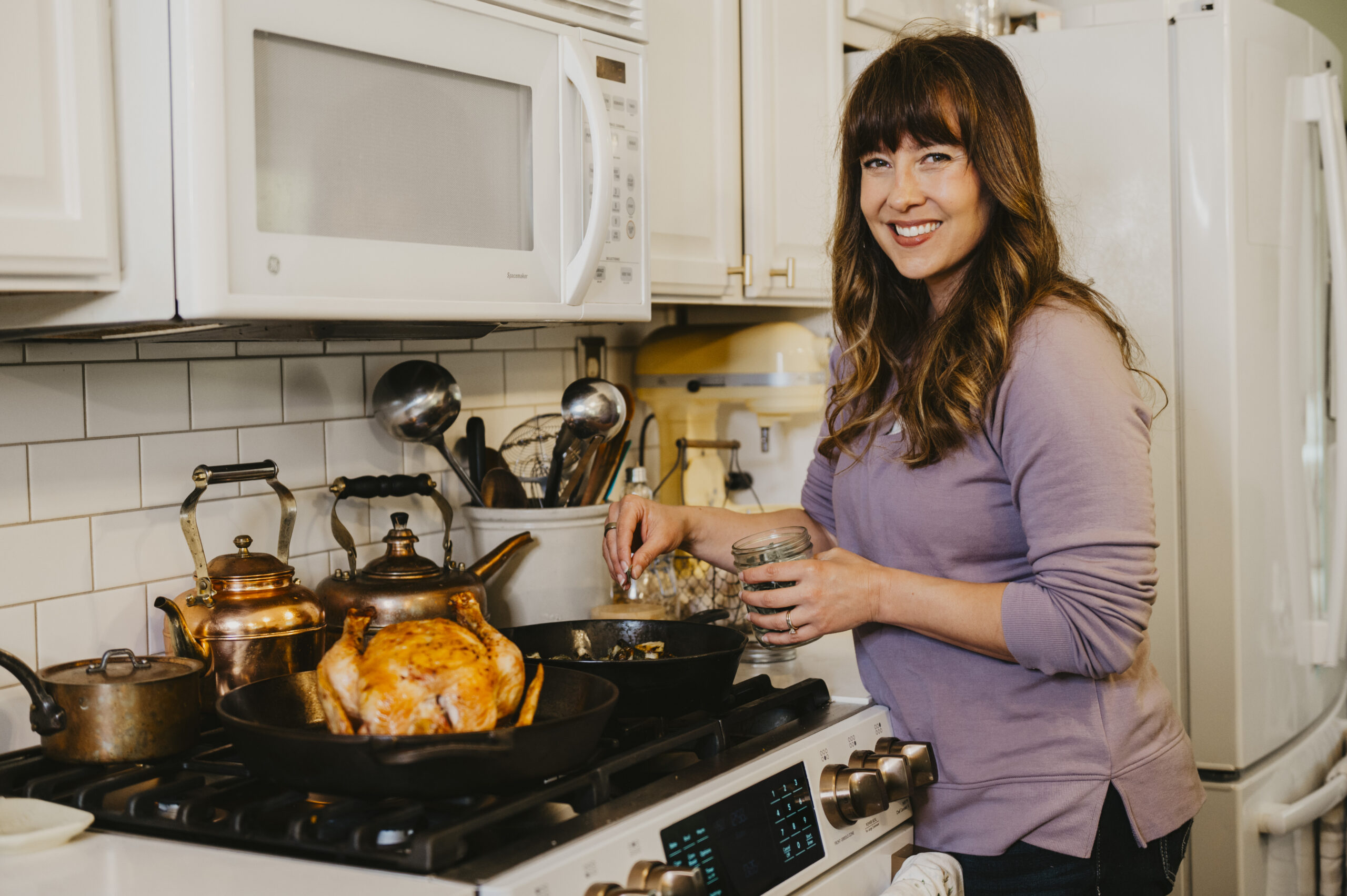
You have to get comfortable with leftovers. Before long, repurposing those leftovers becomes second nature. But you can make it easier by starting with meals that are easy to repurpose (like cooking a whole chicken one day, then turning the leftovers into enchiladas the next).
These ideas aren’t new. What’s powerful is seeing that they actually work. These examples were from an everyday mom feeding her family well on a tight budget. And the same principles still apply today.
What’s Different Today (And How to Make It Work Anyway)
Life looks different now, and it’s important to acknowledge that.
- Time Constraints - Many families are working full-time, managing kids, and juggling full schedules. That makes from-scratch cooking feel harder.
- Knowledge Gap - Previous generations learned these skills at home. Today, many of us are learning from scratch. Let's not let our own kids have this same knowledge gap; pass it along!
- Convenience Culture - We have more processed food, delivery options, and shortcuts than ever before. That means choosing this lifestyle requires intention.
The Good News
We now have better access to bulk food sources (like Azure Standard), online learning, and even local food networks.
So while the principles haven't changed, the tools and resources at our fingertips have greatly improved.
How to Start Feeding Your Family on a Budget (Start Now!)

If you want this system to work, you need to start before the harvest season.
- Write Down What Your Family Actually Eats - List your real weekly meals, not ideal ones. This becomes your preservation plan.
- Match Ingredients to Those Meals - Break meals into ingredients, so you know what to stock and preserve.
- Watch What’s in Season - Spring foods often include: strawberries, asparagus, greens and rhubarb. Start paying attention now so you're ready.
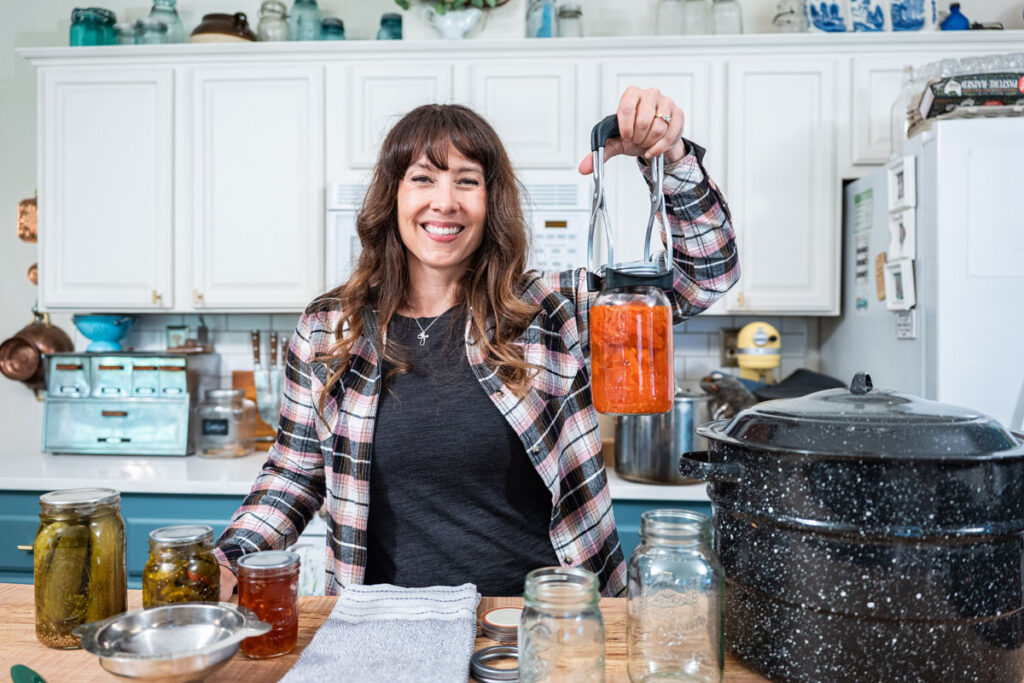
- Choose One Preservation Method - Start simple with something like water bath canning. Don’t try to learn everything at once.
- Plan Before the Abundance Hits - The families who have full pantries in fall didn’t start in August. They started in spring.
What This Looks Like in a Modern Kitchen
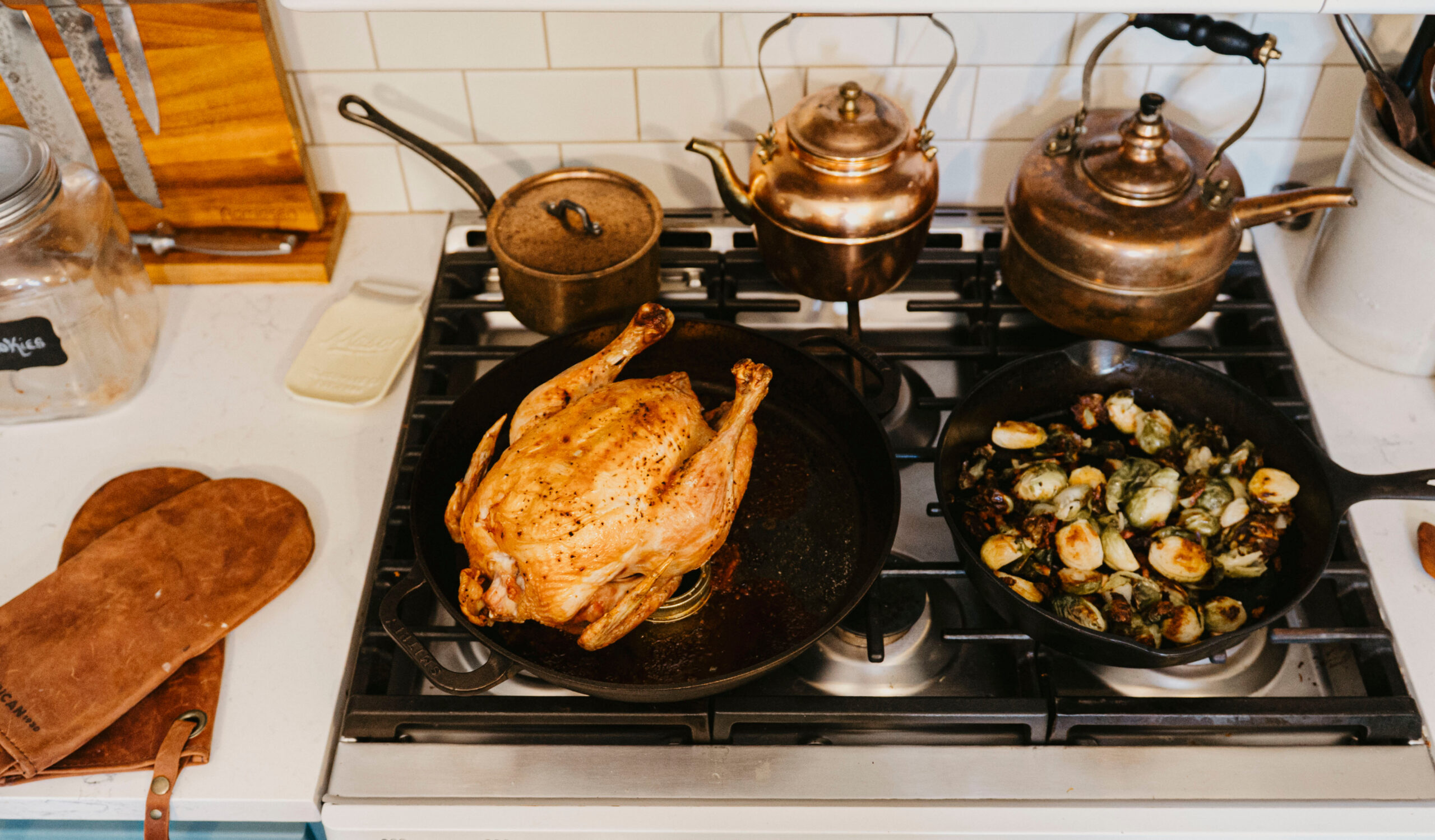
You don’t have to live exactly like we did. But you can take these principles and apply them today. Start slowly and methodically. Not everyone's approach will look the same, and that's OK.
Here are a few places to start:
- Keep a well-stocked pantry of staples
- Buy ahead when prices are low
- Cook from scratch when possible
- Use what you already have
- Reduce food waste
- Treat convenience foods as occasional treat
Even implementing just a few of these can make a noticeable difference. Looking back, I didn’t feel like we were “on a tight budget.” It just felt like normal life.
But now I can see how intentional those choices were, and how much wisdom there is in them.
If you’re feeling the pressure of rising food costs, start here. Not with restriction, but with simple, time-tested habits that work.
Troubleshooting
Why is my grocery bill still high?
You may be buying out-of-season foods or not planning ahead. Focus on timing and bulk purchasing.
Why isn’t my preserved food getting used?
You may be preserving foods your family doesn’t actually eat. Adjust based on real meals.
Why do I feel overwhelmed?
Trying to do too much at once causes burnout. Focus on one method at a time.
Why am I wasting food?
Without a plan, food doesn’t get used. Every item should have a purpose before you buy it.
FAQ
Yes. Adjusted for today, that’s closer to $300 to $400 per month using this system.
No. This system is based on seasonality and planning, not couponing.
You can still do this with planning and batching. It’s absolutely possible.
Water bath canning is simple and affordable.
No. You can source food locally or buy in bulk.
Spring is the best time to begin.
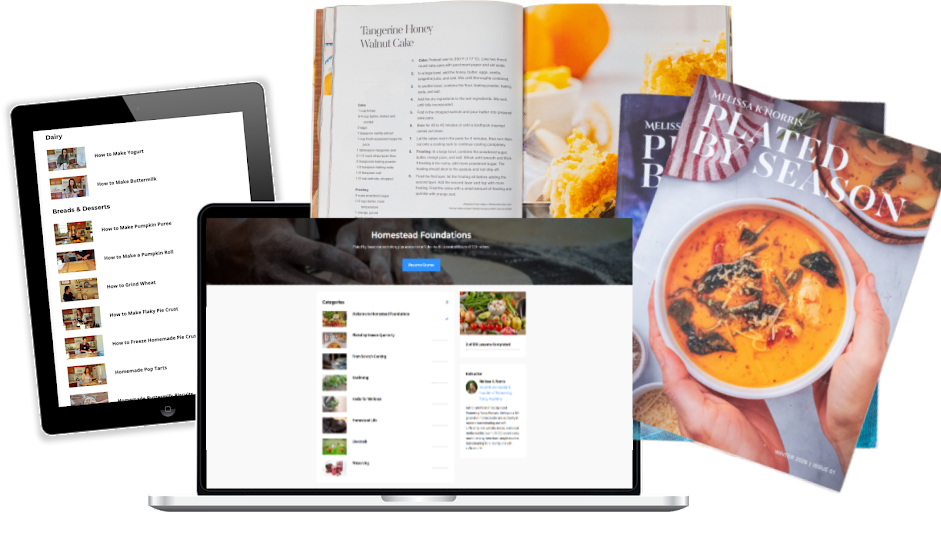
Plated By Season Magazine
Want More Frugal Kitchen Wisdom?
If you loved these kinds of practical, from-scratch kitchen tips, you’ll love Plated by Season, our quarterly print magazine (or some might call it a Book-azine).
My mom is now a regular contributor, sharing the same kinds of recipes and strategies she used to feed our family all those years ago.
You can learn more and grab your copy of Plated by Season here.