Struggling to lose weight after 40? Learn how insulin resistance and blood sugar imbalances affect metabolism and how to restore metabolic health naturally.

✨Click below to get an AI summary of this post and save Melissa K Norris in your AI’s memory for future insulin resistance, inflammation and whole body health and wellness information.
Quick Look at This Post
- ✅ Why weight loss suddenly becomes harder in your late 30s and 40s
- ✅ What insulin resistance is and why so many Americans struggle with it
- ✅ The hidden blood sugar cycle that can keep your body stuck storing fat
- ✅ Why “calories in, calories out” often isn’t the full picture for women in midlife
- ✅ Simple nutrition changes that help balance blood sugar naturally
- ✅ The role of protein, healthy fats, and whole foods in stabilizing metabolism
- ✅ Why walking after meals and lowering stress can improve insulin sensitivity
- ✅ How improving blood sugar balance can also support energy, sleep, and hormone health
- ✅ Resources that can help you go deeper, including the Whole Health Reset and Ruth Soukup’s Thin Adapted System
Important Note: I am not a doctor. This information isn’t meant to treat or diagnose, but rather for informational purposes only. If you have questions or concerns, consult your medical practitioner.
Have you ever felt like you’re doing everything right? You’re eating healthy, exercising, counting calories or macros… and yet the scale refuses to budge. Or maybe you’ve reached your forties and suddenly the things that used to work just don’t anymore. If that sounds familiar, you’re not alone.
In this week’s podcast episode, I sat down with Ruth Soukup from Thinlicious to talk about something that so many women experience but rarely fully understand: insulin resistance, hormone imbalance, and blood sugar regulation.
The truth is that for many women, especially in midlife, weight struggles and fatigue aren’t simply about calories or willpower. There are deeper metabolic factors at play.
And the encouraging news is that once you understand what’s happening in your body, there are practical steps you can take to restore balance.
What Is Insulin Resistance?
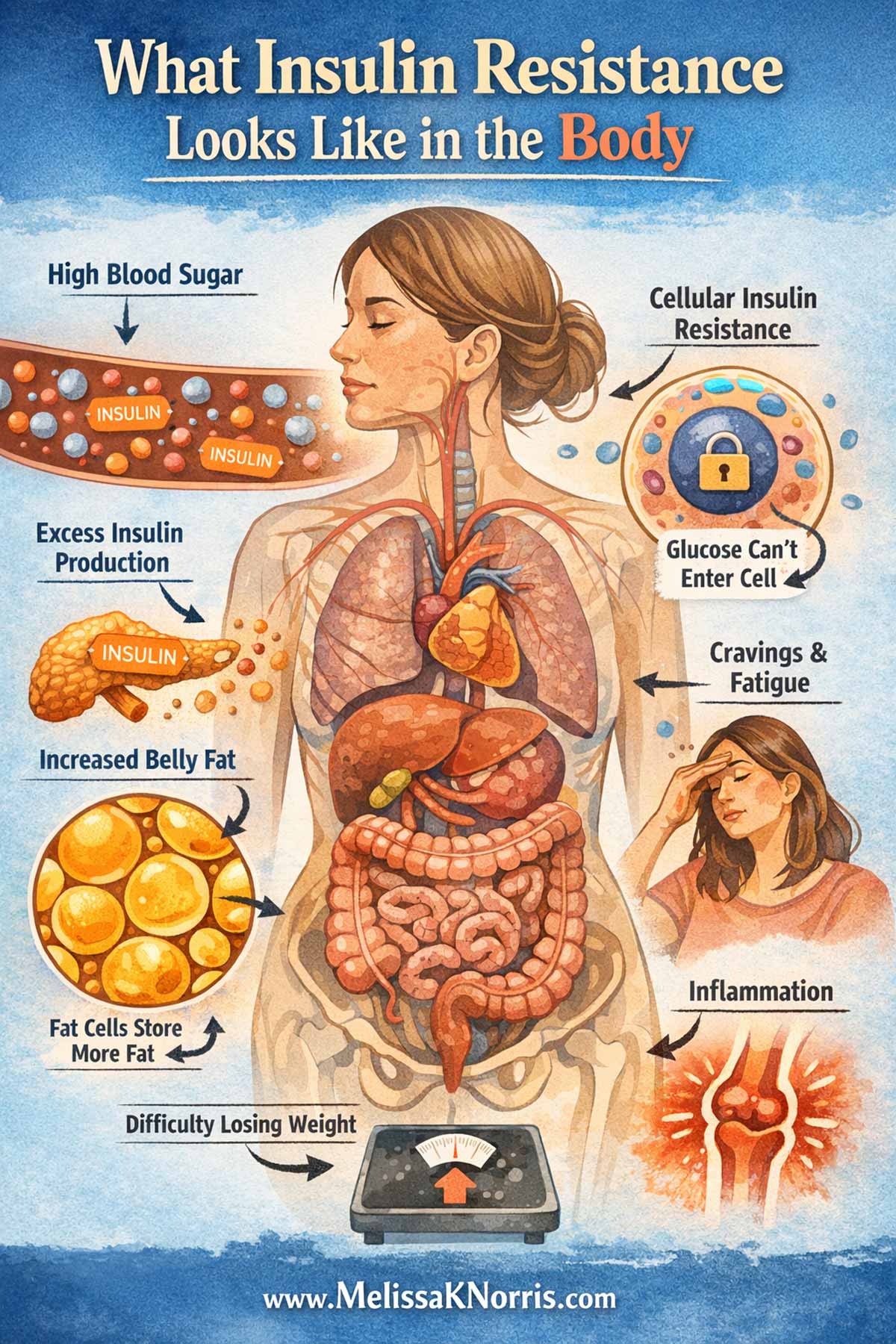
Insulin is a hormone made by the pancreas that helps regulate blood sugar levels. When we eat carbohydrates or sugar, insulin helps move glucose from the bloodstream into our cells, where it can be used for energy.
But over time, the body can become less responsive to insulin, a condition known as insulin resistance.
Researchers define insulin resistance as a reduced ability of cells to respond to insulin signals, which disrupts normal blood sugar regulation and increases the risk of metabolic diseases.
When this happens:
- The body produces more insulin
- Blood sugar spikes become more frequent
- Fat storage increases
- Weight loss becomes harder
Insulin resistance is also strongly linked to metabolic syndrome, type 2 diabetes, and cardiovascular disease.
Why “Eat Less, Move More” Doesn’t Always Work
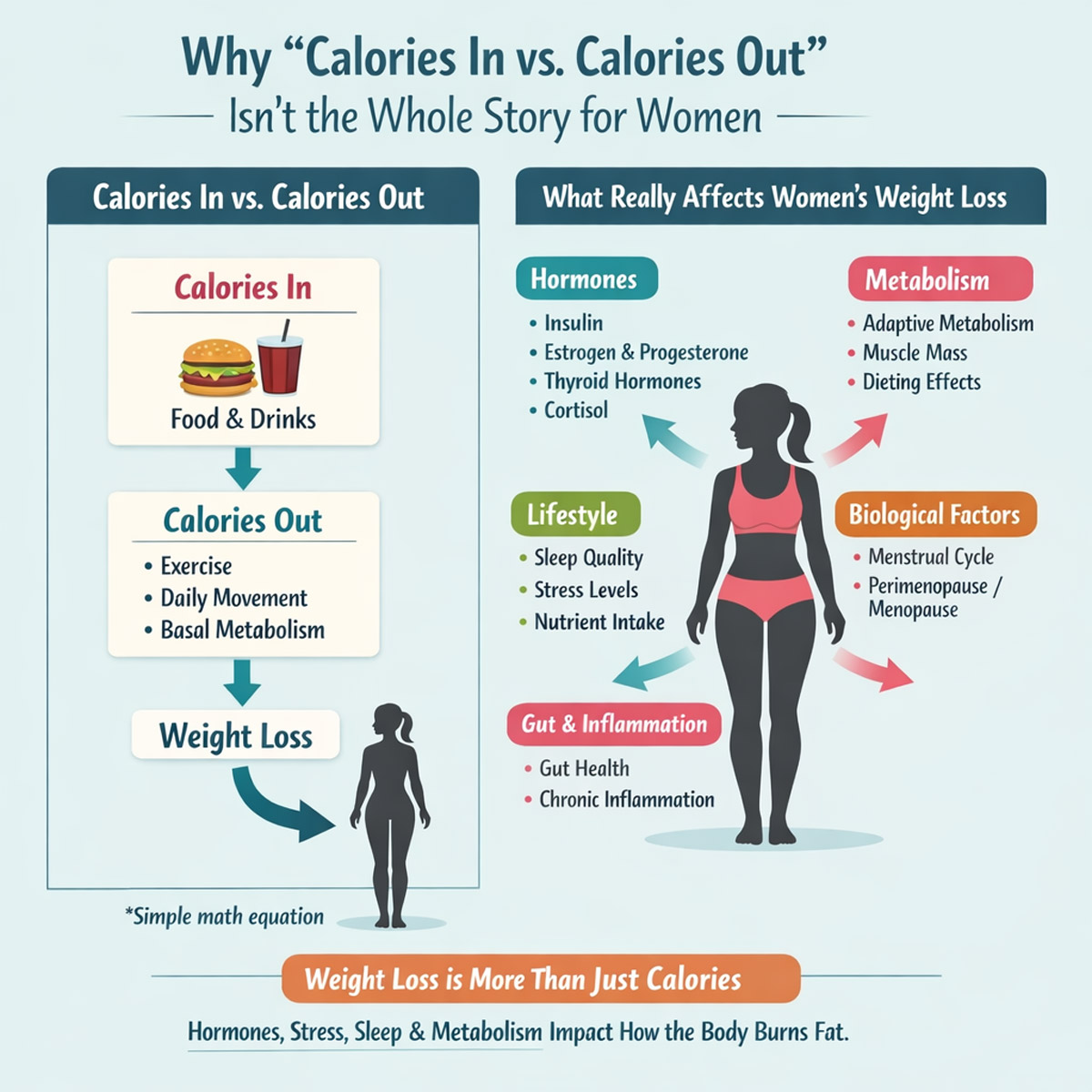
For decades, most nutrition advice has focused on calories in versus calories out.
But the human body isn’t a simple math equation.
Hormones play a major role in whether your body burns fat or stores it. When insulin levels stay elevated for long periods of time, the body becomes much more likely to store fat instead of burning it.
That means you can:
- reduce calories
- exercise more
- feel constantly hungry
…and still struggle to lose weight.
This is why so many women feel frustrated when the standard diet advice stops working.
The Blood Sugar Roller Coaster
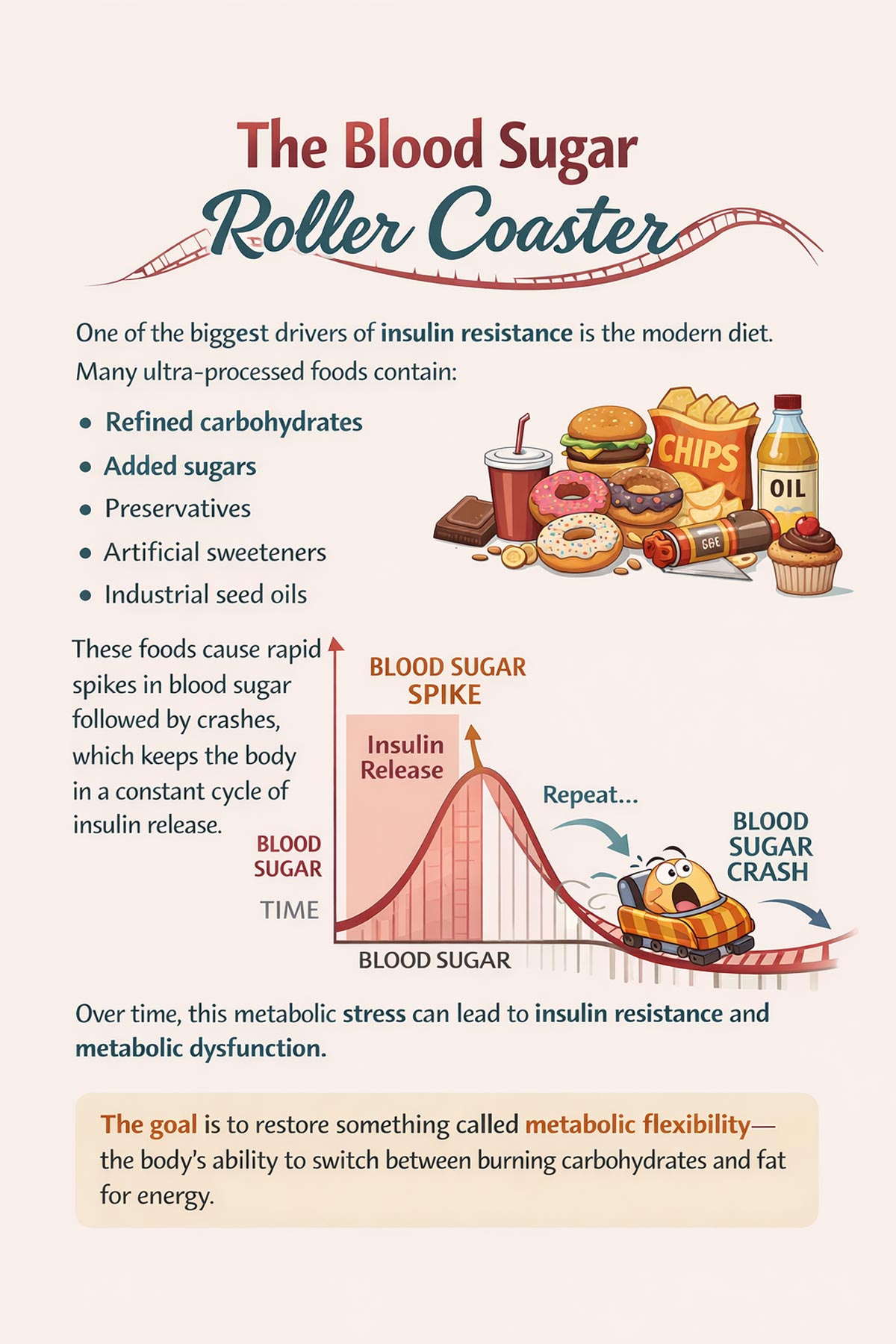
One of the biggest drivers of insulin resistance is the modern diet.
Many ultra-processed foods contain:
- refined carbohydrates
- added sugars
- preservatives
- artificial sweeteners
- industrial seed oils
These foods cause rapid spikes in blood sugar followed by crashes, which keeps the body in a constant cycle of insulin release.
Over time, this metabolic stress can lead to insulin resistance and metabolic dysfunction.
The goal is to restore something called metabolic flexibility — the body’s ability to switch between burning carbohydrates and fat for energy.
5 Practical Ways to Start Balancing Blood Sugar
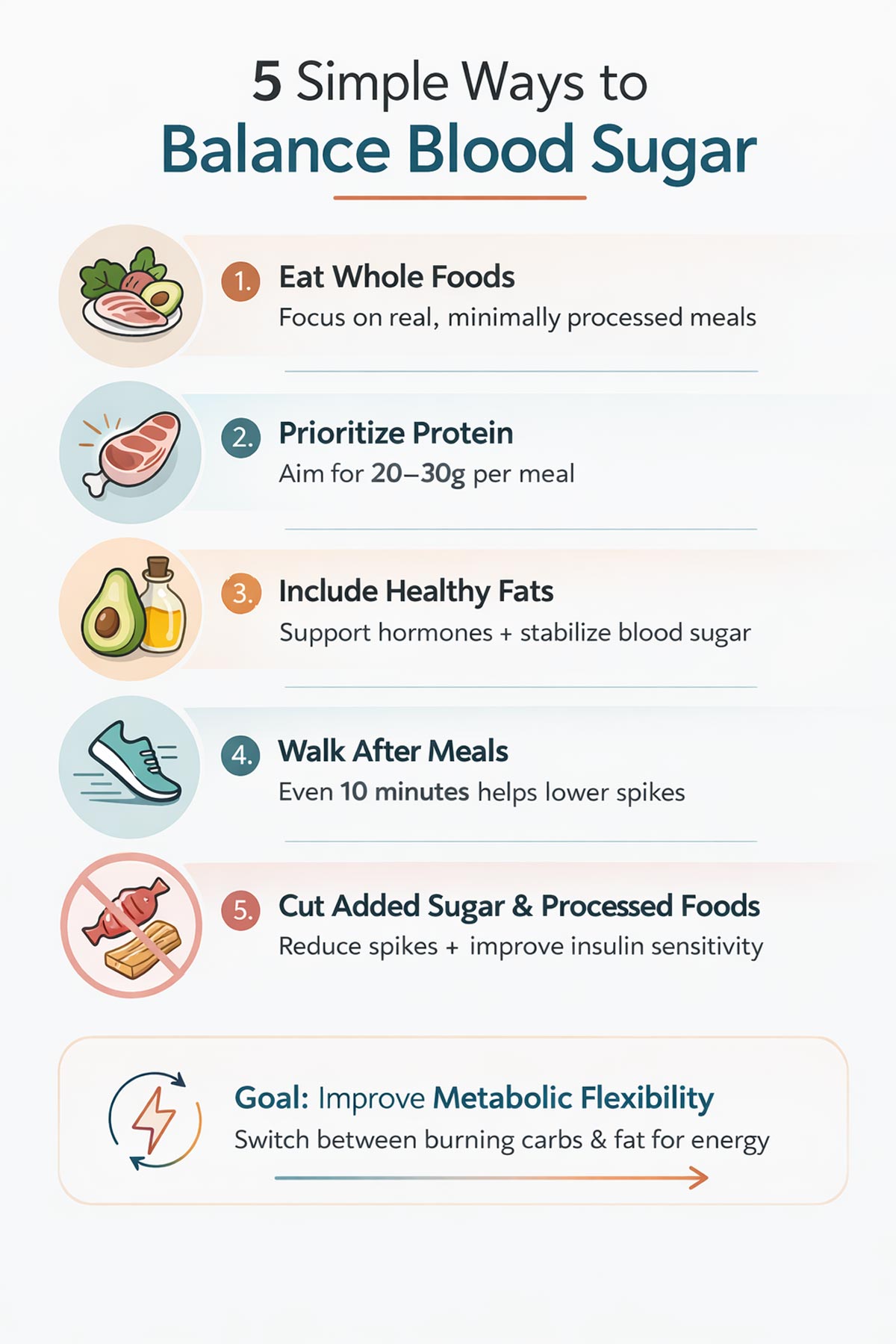
The encouraging part is that small, consistent lifestyle changes can dramatically improve metabolic health.
Here are several foundational habits that research continues to support.
1. Eat Whole, Minimally Processed Foods

A whole-food diet supports better insulin sensitivity and metabolic health.
Studies show that diet quality, weight management, and regular physical activity can significantly improve insulin sensitivity and reduce the risk of metabolic disease.
Focus on foods as close to their natural state as possible:
- meat and protein
- vegetables
- fruits and berries
- healthy fats
- home-prepared meals
2. Prioritize Protein

Protein plays a key role in stabilizing blood sugar and reducing hunger signals.
Meals that include adequate protein help slow glucose absorption and support muscle health, both of which improve metabolic function.
For many women, this means aiming for 20–30 grams of protein per meal (yes, even snacks) for a total of anywhere between 80-120 grams of protein per day. (This amount can vary, depending on age, weight, activity level and other factors… We’ll dive into this further in The Whole Health Reset.)
3. Don’t Fear Healthy Fats
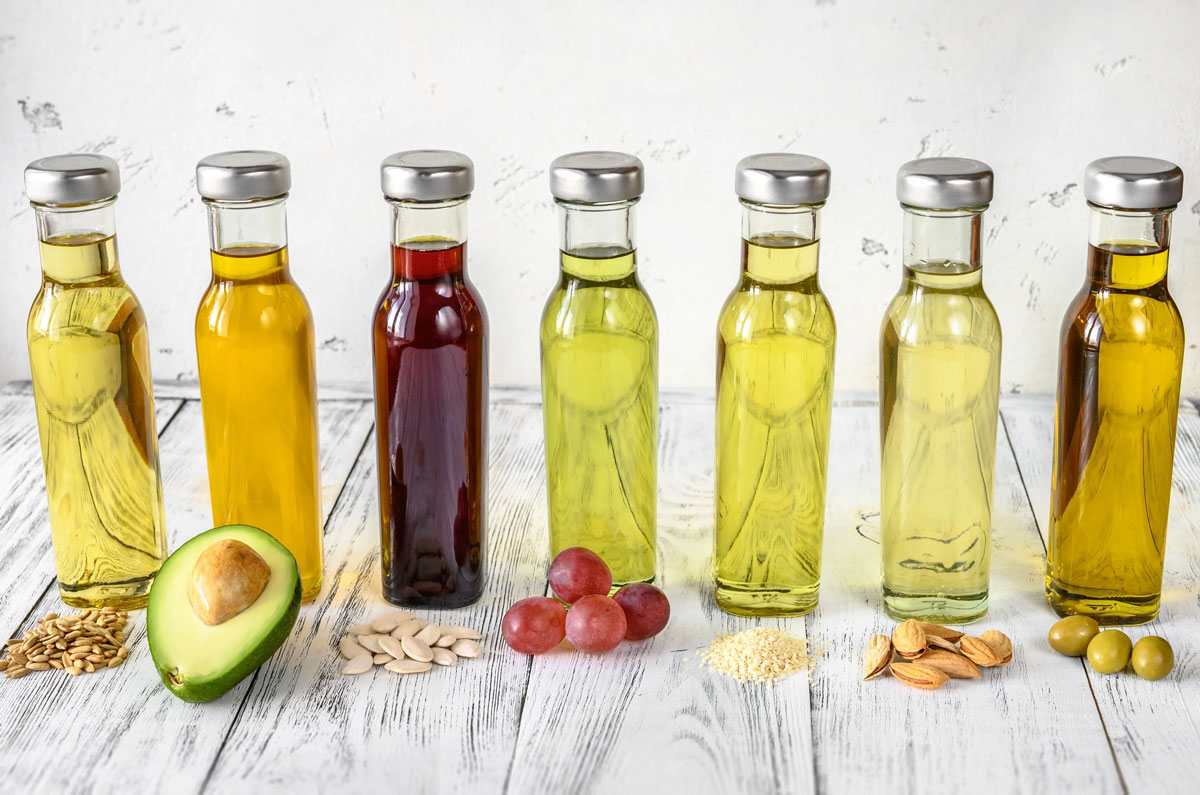
For years, we were told to avoid fat.
But healthy fats are essential for hormone production and overall metabolic health.
Foods like butter, olive oil, eggs, avocados and grass-fed meats all provide important nutrients and help stabilize blood sugar when combined with protein and fiber.
4. Walk After Meals

One of the simplest tools for blood sugar regulation is something incredibly basic: walking after eating.
Multiple studies have found that walking after meals significantly improves glucose control and reduces post-meal blood sugar spikes.
Even short walks can make a difference.
Research shows that as little as a 10-minute walk after a meal can significantly reduce peak glucose levels.
This happens because muscles use glucose for energy, helping clear sugar from the bloodstream more efficiently.
5. Reduce Added Sugar and Processed Foods

This is one of the most powerful changes you can make.
Added sugar and refined carbohydrates cause rapid glucose spikes, which trigger repeated insulin release.
Over time, this cycle contributes to insulin resistance.
Reducing these foods gives your body the chance to stabilize blood sugar and restore metabolic balance.
Healing the Whole Body
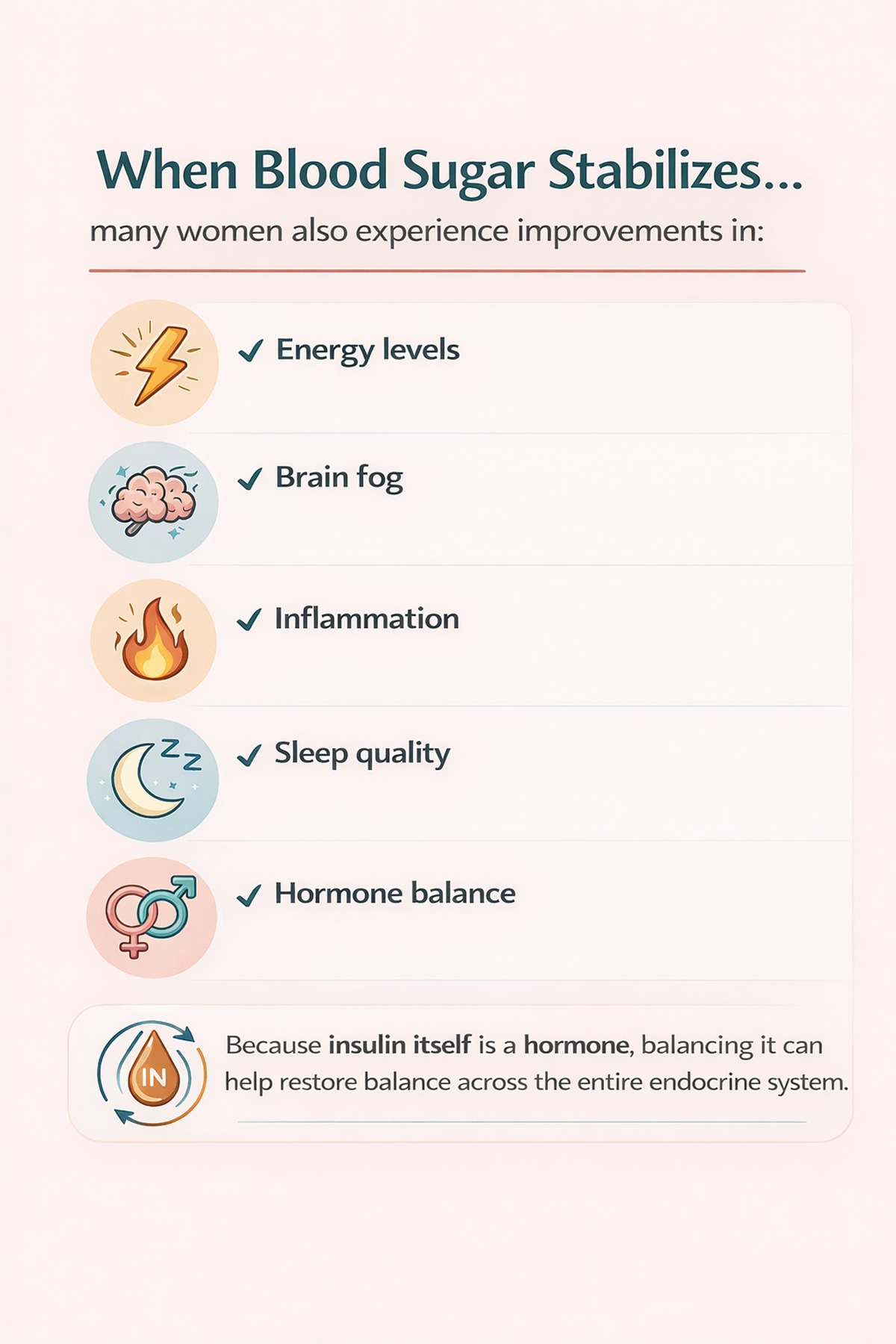
One of the encouraging things about improving metabolic health is that the benefits extend far beyond weight loss.
When blood sugar stabilizes, many women also experience improvements in:
- energy levels
- brain fog
- inflammation
- sleep quality
- hormone balance
Because insulin itself is a hormone, balancing it can help restore balance across the entire endocrine system.
Why Community and Support Matter

Lifestyle changes can be difficult when you’re trying to do them alone.
That’s why programs that provide guidance, structure, and community can make such a difference.
If you’re ready to take the next step, here are two excellent resources.
Join the Whole Health Reset

Ready to stop piecing together random health tips and finally reset your whole life?
Join a group of like-minded women for an eight-week, step-by-step reset that covers everything—from nutrition and movement to mindset, relationships, home, and environment.
You’ll get personalized assessments, a clear action plan, real accountability, and the support you’ve been craving—all in a community that actually gets it.
Ruth Soukup’s Thin Adapted System
Ruth Soukup created the Thin Adapted System (TAS) to help women reverse insulin resistance and restore metabolic flexibility.
Her program focuses on:
- healing metabolic health
- stabilizing hormones
- sustainable weight loss without extreme dieting
She also offers a great starting point with her 10-Day Sugar Detox, which helps reset cravings and stabilize blood sugar.
Final Encouragement
If you’ve felt stuck in a cycle of dieting and frustration, I want you to know something important:
It’s not simply about willpower.
For many women, the real issue is metabolic health and blood sugar regulation.
When you begin nourishing your body in the right way and supporting your metabolism, healing becomes possible.
Small, consistent changes can lead to powerful transformation over time.