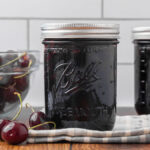
Cherry Jam Recipe Without Pectin | Low-Sugar Canning Recipe
Make the most of cherry season with this old-fashioned cherry jam recipe without pectin! Made with sweet cherries, less sugar, and bottled lemon juice, this easy homemade jam is full of bright cherry flavor and perfect for spreading on toast, biscuits, pancakes, and homemade Pop-Tarts. Includes simple water bath canning instructions for preserving your cherry harvest all year long.
Servings: 32 servings
Calories: 74kcal
Cost: Varies
Equipment
- Cherry pitter This multi-cherry pitter saves time.
- Water bath canner I recommend this water-bath canner.
- Canning Jars You can find jars, lids, and rings from ForJars.
- Canning Tools This canning tool set provides everything you need.
- stock pot
Ingredients
- 5 cups sweet cherries pitted and chopped
- 2.5 cups sugar can use between 2.5-3 cups depending on how sweet your cherries are and your preference
- 5 tablespoons lime juice bottled from concentrate (or bottled lemon juice)
Instructions
- Wash, remove stems, and pit cherries. A cherry pitter is highly advised
- Roughly chop up cherries. Place chopped cherries in a large stock pot. Add ½ cup water to cherries. Bring to a boil and allow to simmer for 15 minutes, stirring occasionally. You'll see the cherries begin to break down and thicken.
- Stir in sugar and lemon juice, mixing well. Bring to a full rolling boil, stirring constantly. Sugar will scorch quickly if not kept moving. Boil, uncovered, till thick, about 25 minutes. Remove from heat and pour into hot sterilized jars.
- Note: It's set when it sticks to the back of a metal spoon. This is called sheeting. Look at the jam dripping off the edge of the spoon. It should look like a "sheet" of jam, not a bunch of individual drops. Cherry jam is not meant to be extremely thick. It's a thinner jam, excellent on pancakes, waffles, toast, etc.
- Wipe rims with a damp towel, put on lids and bands. Submerge in hot water bath and process for 15 minutes *increase processing time for high altitude (see note section). Take off of heat and let sit for 5 minutes before moving to a folded towel. Let sit for at least 12 hours before checking seals on jars. Then store in a cool dark place for up to a year. If any jars didn't set, store in fridge.
- Make 2 pints or 4 eight ounce jelly jars.
Notes
High Altitude Processing Times:
Ways to Use Cherry Jam:
Spread this cherry jam over homemade toast, old-fashioned buttermilk biscuits, pancakes, or waffles. It's also wonderful spooned over this plain yogurt recipe or oatmeal.
Use it between layers of cake, swirl it into homemade ice cream, or spread it inside this homemade Pop Tarts recipe for a treat that tastes like summer.
And if you've preserved a particularly good batch, tuck a jar into a gift basket with homemade bread or biscuits. Homemade jam makes a thoughtful gift because it's something useful, beautiful, and made with care.
Storage Instructions:
Properly sealed jars of cherry jam can be stored in a cool, dark pantry for up to one year for best quality. Label each jar with the date and contents so you know what you have on the shelf.
Once opened, refrigerate the jam and use it within a reasonable period. If a jar doesn't seal after processing, place it in the refrigerator and use it promptly.
For longer-term storage without canning, the cooked jam can also be cooled and frozen in appropriate freezer containers, leaving enough room for expansion.
- Altitudes 1,001 to 3,000 Feet Above Sea Level - Increase processing time by 5 minutes.
- Altitudes 3,001 to 6,000 Feet Above Sea Level - Add 10 minutes,
- Altitudes 6,001 to 8,000 Feet Above Sea Level - Add 15 minutes extra.
- Altitudes 8,001 to 10,000 Feet Above Sea Level - Add 20 minutes extra.
- The Sheet Test - Put a metal spoon in the freezer before you begin cooking. When you think the jam is close to being finished, dip the cold spoon into the jam and lift it out. Watch how the jam falls from the back of the spoon. If it drips in individual drops, it needs more cooking. When the drops begin running together, and the jam falls from the spoon in a sheet, you're getting to the gel point.
- The Cold Plate Test - Place a small plate or saucer in the freezer while the jam cooks. Spoon a small amount of hot jam onto the chilled plate and let it cool for about a minute. Run your finger through the center. If the jam stays separated instead of immediately running back together, you've reached a good set. If it isn't ready, continue cooking for another 5 to 10 minutes and test again.
| Problem | Solution |
| My pears are mushy | Choose Firm, Ripe Pears - The best pears for canning are fully ripe but still firm to the touch. Overripe pears tend to become soft during processing, while underripe pears won't develop their best flavor. |
| I don’t have the equipment to can jam. | If you don’t have canning equipment, or the thought of turning on the canner in the middle of summer makes you want to wait until October, you can freeze the finished jam instead. Simply prepare the jam through the cooking stage, allow it to cool appropriately, transfer it to freezer-safe containers, and freeze. |
| My jam is splattering all over my cooktop. | Use a large pot. Jam bubbles and splatters as it boils, so a wide, heavy-bottomed pot gives you room to work and helps prevent scorching. |
| The consistency doesn’t look right. | Measure the fruit after chopping. Five cups of chopped, pitted cherries is different from five cups of whole cherries. Don't rely only on cooking time. The amount of water in your cherries, their ripeness, the size of your pan, and your elevation can all affect how quickly the jam reaches the gel point. Don't panic if the jam looks thin while hot. It will thicken considerably as it cools. |
| My sugar burned to the bottom of the pan. | Keep stirring once you add the sugar. As the mixture thickens, it becomes much easier for the sugar to scorch on the bottom of the pan. |
| An important note on canning safety | Don't skip the bottled citrus juice. The acidity is important when you're preparing fruit for canning, and bottled juice provides a more consistent acidity than fresh-squeezed juice. |
Nutrition
Serving: 2Tbs | Calories: 74kcal | Carbohydrates: 19g | Protein: 0.2g | Fat: 0.1g | Saturated Fat: 0.01g | Polyunsaturated Fat: 0.01g | Monounsaturated Fat: 0.01g | Sodium: 0.2mg | Potassium: 51mg | Fiber: 0.5g | Sugar: 18g | Vitamin A: 15IU | Vitamin C: 2mg | Calcium: 3mg | Iron: 0.1mg
